[publishpress_authors_box layout="ppma_boxes_121"]
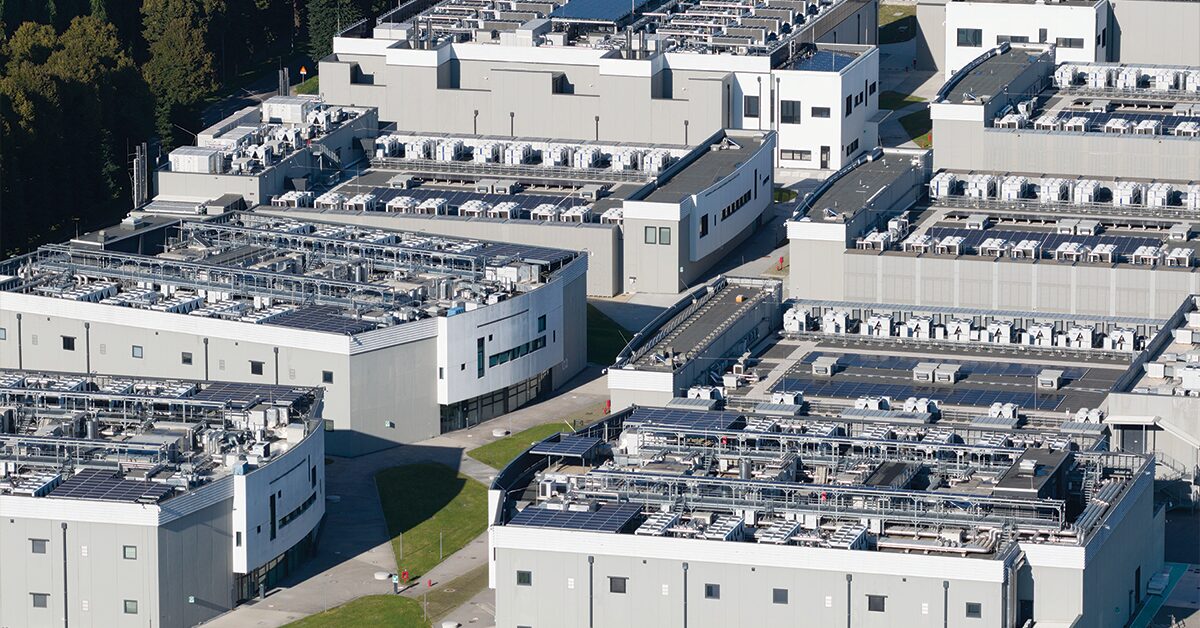
Texas is projected to become the largest global data center market by 2030, according to new research conducted by real estate firm Jones Lang LaSalle (JLL).
In a press release announcing the research findings, JLL said Texas currently has 6.5 gigawatts (GW) of data center capacity under construction. One gigawatt can power about 750,000 homes on average. Last year, total data center capacity expanded by 35 GW.
Currently, the largest data center market is Northern Virginia, which JLL calls a “mature hub.” Dallas-Fort Worth and Silicon Valley fall into this category.
Other parts of Texas, as well as Tennessee, Ohio, and Wisconsin, are called “frontier markets,” or areas that meet certain criteria to facilitate the mass development of data centers outside of mature hubs.
These criteria include:
• Places with plentiful land
• Lack of zoning regulations
• Access to water and other renewable energies
• Business-friendly climate
The Austin American-Statesman reports that there are currently 55 existing or planned data centers for the area between Temple and San Antonio. Additional unconfirmed projects could triple that number.
CBRE, a real estate research firm, reported in August 2025 that Austin and San Antonio’s combined data center capacity under construction was 463.5 megawatts (MW), which had quadrupled since 2024. CBRE currently ranks the market as the second-largest secondary market in the country, behind Southern California.
In the first half of 2025, the Austin-San Antonio market had:
• Total inventory of 193.0 MW
• Year-over-year change of 3.3 MW
• 3.5 MW available
• 1.8% vacancy rate
• Year-over-year change of 0 basis points (bps)
• H1 2025 net absorption of 3.2 MW
• Year-over-year change of 23.7 MW
• Rental rates of $145-$180 per kilowatt-month
In February, the Round Rock City Council unanimously approved plans for a 75 MW data center to be built by Dallas-based Skybox Datacenters. The developer also has two other datacenters in the area: a 141,000-square-foot, 30 MW building in Pflugerville and a 1.28-million-square-foot, 600 MW facility in Hutto.
The public comment period of the Round Rock meeting lasted several hours, with two dozen Williamson County residents voicing opposition, the Statesman reported.
Public opposition frequently cites environmental concerns.
The Electric Reliability Council of Texas said data centers will cause Texas energy demands to surge by 71 percent by 2031.
Additionally, data centers consume massive amounts of water. The Environmental and Energy Study Institute reports that “large” data centers draw up to five million gallons of water a day, though the institute doesn’t define “large.”
In February, the San Marcos City Council vetoed a proposed $1.5 billion data center that would have been partially located within city limits. The Statesman reports that hundreds of residents showed up to the council meeting, and the public comment period took nearly nine hours.
Following the veto for the San Marcos facility, Hays County Judge Ruben Becerra proposed a 30-day halt on consideration for “water-intensive industrial projects” like data centers. The Hays County Commissioners Court. The Austin Business Journal reported that the proposition was supported by a majority of the commissioners court, as well as the residents who spoke during the meeting’s public comment period, but Becerra’s call for a pause was tabled.
“I think we would be exposing ourselves to significant legal liability (if the 30-day resolution)was passed,” said Hays County Assistant District Attorney Chase Young.
Becerra said he feared the water usage of the proposed data center would put Hays County in a position where it couldn’t fill fire trucks.